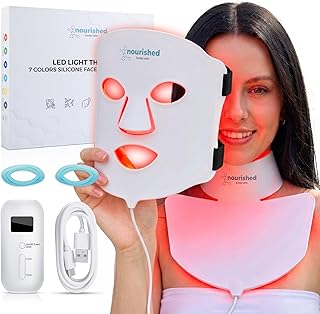
What an LED face mask does
An LED face mask is a wearable shell lined with small light-emitting diodes. You wear it for a set time, often ten to twenty minutes, while the LEDs shine light onto your skin. Many people use red light masks as part of their home skincare routine. Research into LED light for skin is ongoing and results vary between people, so treat a mask as one part of your routine rather than a quick fix.
Wavelengths and colours
Masks list their wavelengths in nanometres. Red light is usually around 630 to 660nm, and near-infrared, which you cannot see, is usually around 810 to 850nm. Some masks also include blue light around 415nm, which some people use for blemish-prone skin. Check exactly which wavelengths a mask offers and whether you can choose between modes. More colours is not always better if you only want red.
Rigid versus silicone masks
Rigid masks are made from a hard plastic shell with LEDs set inside. They are often lighter on the nose and easy to wipe clean. Silicone masks are flexible and sit closer to the face, which some people find more comfortable and even in coverage. Silicone can feel warmer and needs careful cleaning. Try to find a design that fits your face shape well, including around the nose and eyes.
Coverage, neck panels and eye areas
Look at how many LEDs a mask has and where they are placed. Some include a neck and chest panel for the decolletage. Others have cut-outs for the eyes, while dedicated eye masks focus on the area around the eyes. If you want a particular area covered, check the product images and description carefully.
Budget versus premium masks
Masks under £100 can be a good way to try red light at home. Premium masks often offer more LEDs, near-infrared, better fit, rechargeable batteries and longer warranties. Compare session timers, battery life, cleaning instructions and returns policy. Remember that worn masks cannot usually be returned once used, so be confident about the fit.
Using a mask safely
Start with shorter sessions and follow the manufacturer's guidance on frequency. Cleanse the skin first, keep your eyes closed if advised, and stop if you notice irritation. Speak to your GP or a dermatologist before using a mask if you have a skin condition, light-triggered epilepsy, take medication that makes you sensitive to light, or are pregnant.